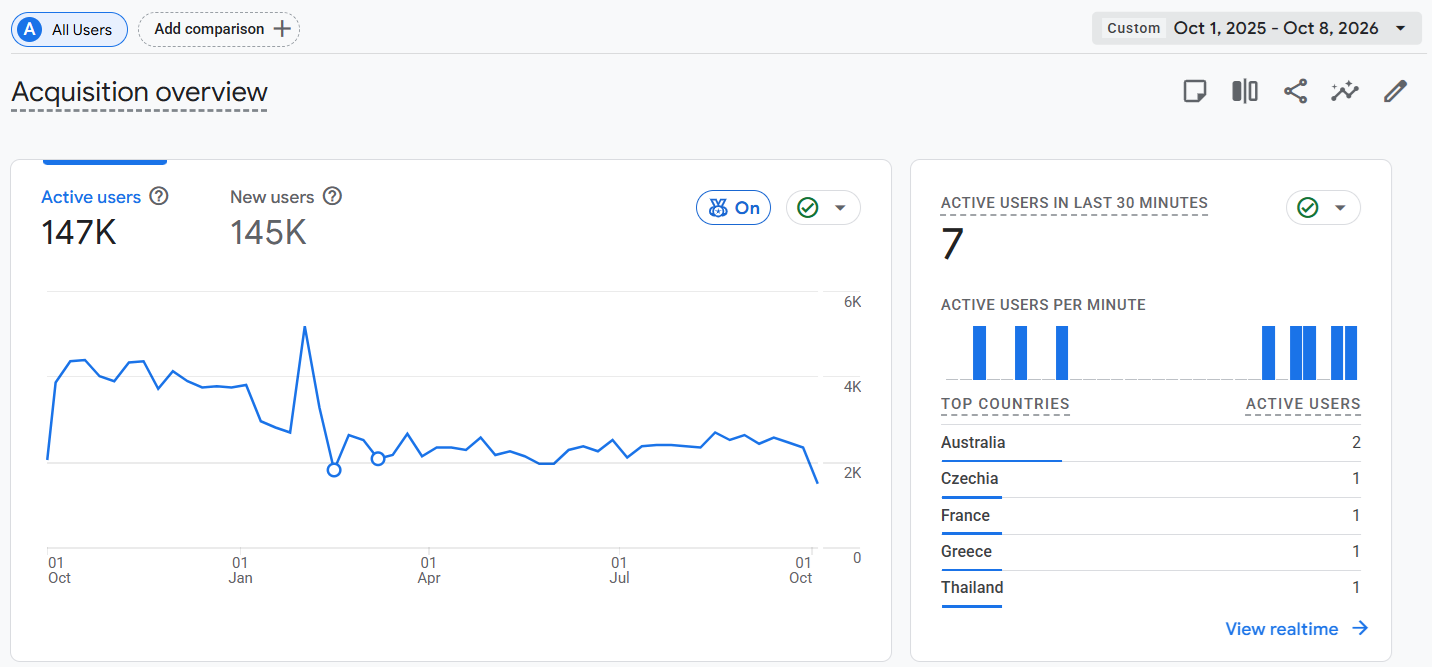
Our goal: Build sustainable organic visibility by improving the website, understanding search intent, and publishing content that genuinely helps the intended audience.
Organic growth is rarely the result of one quick fix. It usually comes from a series of informed decisions, careful implementation, and ongoing analysis. In this case study, we explain the process behind the 100K+ organic traffic milestone and show the performance evidence that supports the result.
01 Make your Website Perfect
Whenever we want to write with a pencil, we first sharpen it perfectly in order to achieve the best writing or painting results. Just like that, building a website with a good user experience is the first step towards making a successful website. In order to provide a good user experience, we chose to develop our website using the Vue.js framework. In 2019, there was very limited material available on the internet about Vue.js SEO, but we still decided to go with Vue.js just to provide a better user experience.
- Improve page loading speed and make sure your website loads quickly.
- If you are displaying ads, make sure the Cumulative Layout Shift (CLS) is less than 0.1, aiming for 0. A higher CLS is disastrous for user experience as well as your website's Google search ranking. CLS may also increase if you use the v-if directive in Vue.js or isVisible in React.
We used the JavaScript setTimeout() method to improve page loading speed. The page loading speed increased in numbers, but when we checked the results under 'Discover what your real users are experiencing,' our site failed. So, you need to keep an eye on real-time data in Google PageSpeed Insights.
02 Research Keyword Search Volume & Trends
Keyword research and analysis help you understand what people are actually searching for and which keywords are trending. Search volume means how many times a phrase is searched in a month. It's a simple calculation: the higher the search volume of a keyword, the more traffic will flow from that keyword.
Never target single-phrase keywords like "laptop" because ranking a brand-new website for such keywords is almost impossible. Instead, target long-tail keywords and create genuine, informative, and unique content that provides answers to users' questions in the best possible way.
Search intent
Understand what people are trying to find, compare, or solve.
Content gaps
Find useful topics and questions that competitors may not cover well.
Prioritisation
Plan your work around relevance, effort, and potential value.
03 Building a strong technical & On-Page SEO foundation
Technical SEO and On-page SEO are must-haves in order to get more organic traffic. Some technical and on-page SEO changes impact user experience, while others directly impact Google search rankings. For example, a few changes to the website and its content can directly impact indexability and website originality, making it easier for Google to understand the page. Here are a few changes that need to be applied to the website to improve technical and on-page SEO.
We faced a lot of technical SEO issues because our website was developed using Vue.js, which is a single-page application, and there were "#" symbols in each internal page URL. Google cannot index URL pages with "#". If your website is also developed using frameworks like Vue.js, React.js, or Angular, then you might face several issues, and you must correct these SEO issues.
Here is a quick checklist of Technical SEO and On-page SEO that needs to be fixed before making a website live:
- Redirect HTTP to HTTPS and non-www to www format. Keep the domain format consistent throughout the website.
- Optimize meta titles and descriptions according to targeted keywords. Meta title length must be below 70 characters, and meta description length must be below 180 characters.
- Add a canonical tag for each URL according to the www or non-www URL structure you have set. For example, if you have redirected https://www.website.com to https://website.com, then the canonical tag on each page must be https://website.com.
- Check the mobile-friendliness of each page. If a website is developed using a WordPress theme, mobile-friendliness might not be a big issue, but if a website is developed with custom CSS/JavaScript design, running a thorough mobile-friendly test is a must.
- Make sure all pages get indexed in Google. If some pages are not getting indexed, there might be a few reasons for this:
- Check the no-follow/no-index robots tags.
- Check the robots.txt file.
- - Make sure your website is not a single-page application. The best way to check whether a website is a single-page application or not is by going to any page, pressing Ctrl + U, and searching for the content in the code. If the content is present, then it is not a single-page app. If the content is missing, then it is a single-page application.
- Optimize site structure, internal linking, and content discovery.
- Add Schema markup.
04 Link-Building from Geniune Good Quality Websites
As per our experience and study, we believe that link building is the most important part of any SEO campaign. If a website has minor technical SEO or on-page SEO issues, then sometimes that website may go unnoticed by Google. But if a website has spammy backlinks, then it may get penalized by Google.
"Pro Tip: Chase quality backlinks over quantity. If you are confused about which backlinks you should consider, then avoid easy backlinks like directory submissions and social bookmarking. Instead, chase backlinks that are difficult to build."
Here are the top link-building practices we performed to achieve 100K+ organic traffic for our website.
- Content Marketing - Building content for websites in similar categories that helps users gain knowledge or provides something they have not read before.
- Profile Maintenance - Making a profile just for a backlink won't add any value. We created profiles on multiple websites and stayed active on those websites, helping other users with our knowledge. For example, we have over 70K answer views and around 100 followers on Quora. This not only adds value to the backlink but also brings visitors from other websites to your website.
- Digital PR - If you have published something out of the box or achieved something really well, then opting for digital PR can be a game changer for your SEO campaign.
- Broken Link Building - Thousands of domains expire every year, and hundreds of these domains have multiple backlinks from good-quality websites. When a domain expires, these backlinks become broken links, and users end up nowhere when they click on them. In this situation, replacing a 404 error backlink with a link to your website containing fresh content can be a good SEO practice.
- HARO News - You earn a HARO backlink when a journalist quotes your expert response about a specific topic. To earn a HARO link, you really need to be an expert in a specific topic and must have some eccentric knowledge about different topics.
"If you have made spammy backlinks by mistake, then you can add those links to a disavow.txt file and submit that file through Google Search Console. Google will not consider those backlinks for your domain.”
05 Measure results with real tools & Apply Data Mining Techniques
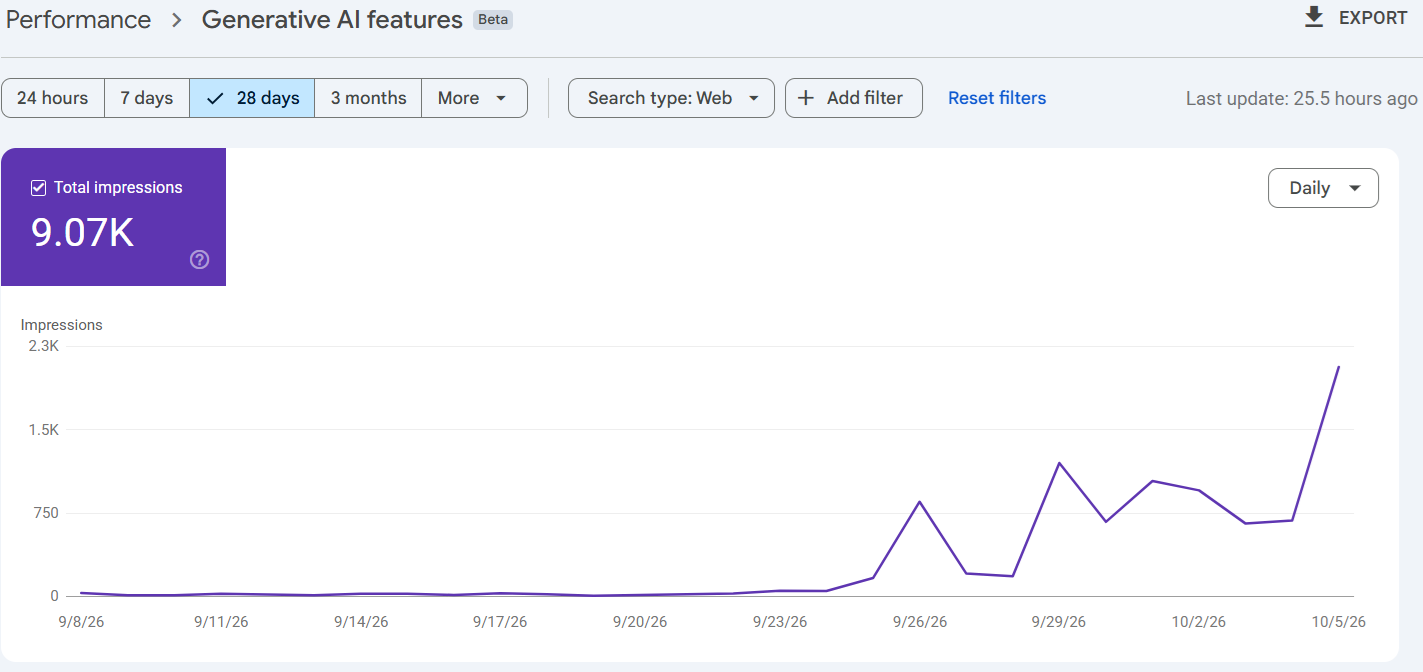
Various tools like Google Analytics and Google Search Console are the most important SEO tools. With Google Search Console, one can determine website performance, total impressions, total clicks, and top-performing web pages on Google. Along with that, a person can also submit the sitemap.xml URL in Google Search Console. Users can also track backlink data in the Links section, check for any manual penalty actions from Google, and much more.
On the other hand, Google Analytics focuses mainly on website traffic sources and acquisition. You can check whether your website is getting more traffic from social media, referrals, organic search engines, and more. So, setting up both of these tools can be a good decision for traffic monitoring and website performance in Google Search.
Once you process the data from Google Search Console and Google Analytics, you can apply data mining techniques, develop a better link-building strategy, and make on-page changes for a better user experience and lead conversion.
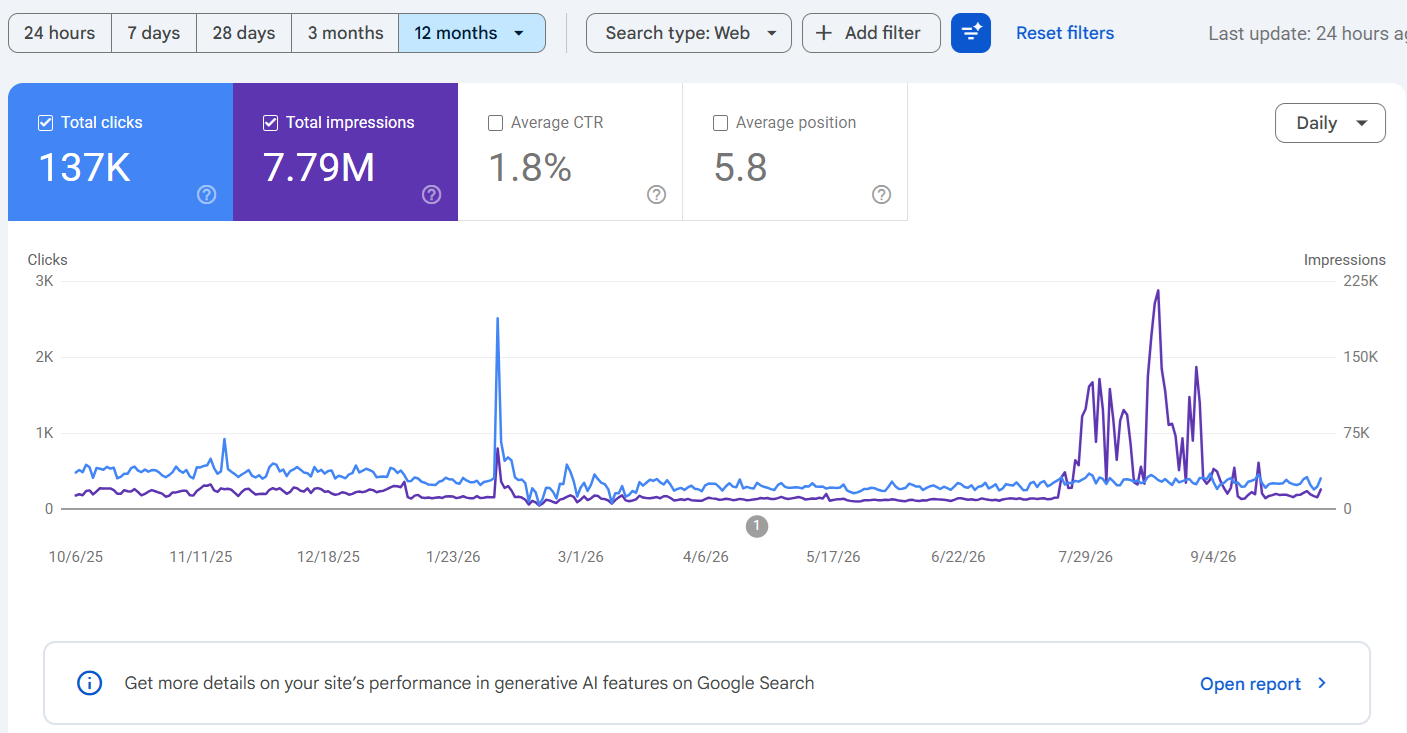
Google Analytics - Track real-time user data.
Google Search Console - Track your website's performance on Google, monitor backlinks, disavow spammy backlinks, check manual actions from Google, and monitor mobile-friendliness, HTTPS protocol, and page loading speed.
Semrush Tool Check your website's backlinks using the SEMrush tool.
06 What we learned along the way
We have learned over the last seven years that SEO and increasing organic traffic are not overnight tasks. Rather, SEO is a blend of consistency, honesty, knowledge, analysis, patience, hard work, and innovation.
Consistency beats isolated fixes
Explain which repeated activities helped maintain progress over time.
Measure before making assumptions
Show how reporting helped you choose the next action.
Useful content is the foundation
Describe how you kept the visitor's question at the centre of each page.
07 The takeaway
We have shared our seven years of experience with our domain, where we are getting 100K+ yearly organic traffic. There are still many areas we need to improve in order to increase organic traffic. In this article, we have shared our experience and the difficulties we faced in on-page SEO and technical SEO, as our websites are developed using Vue.js, Nuxt.js, and React.js frameworks.